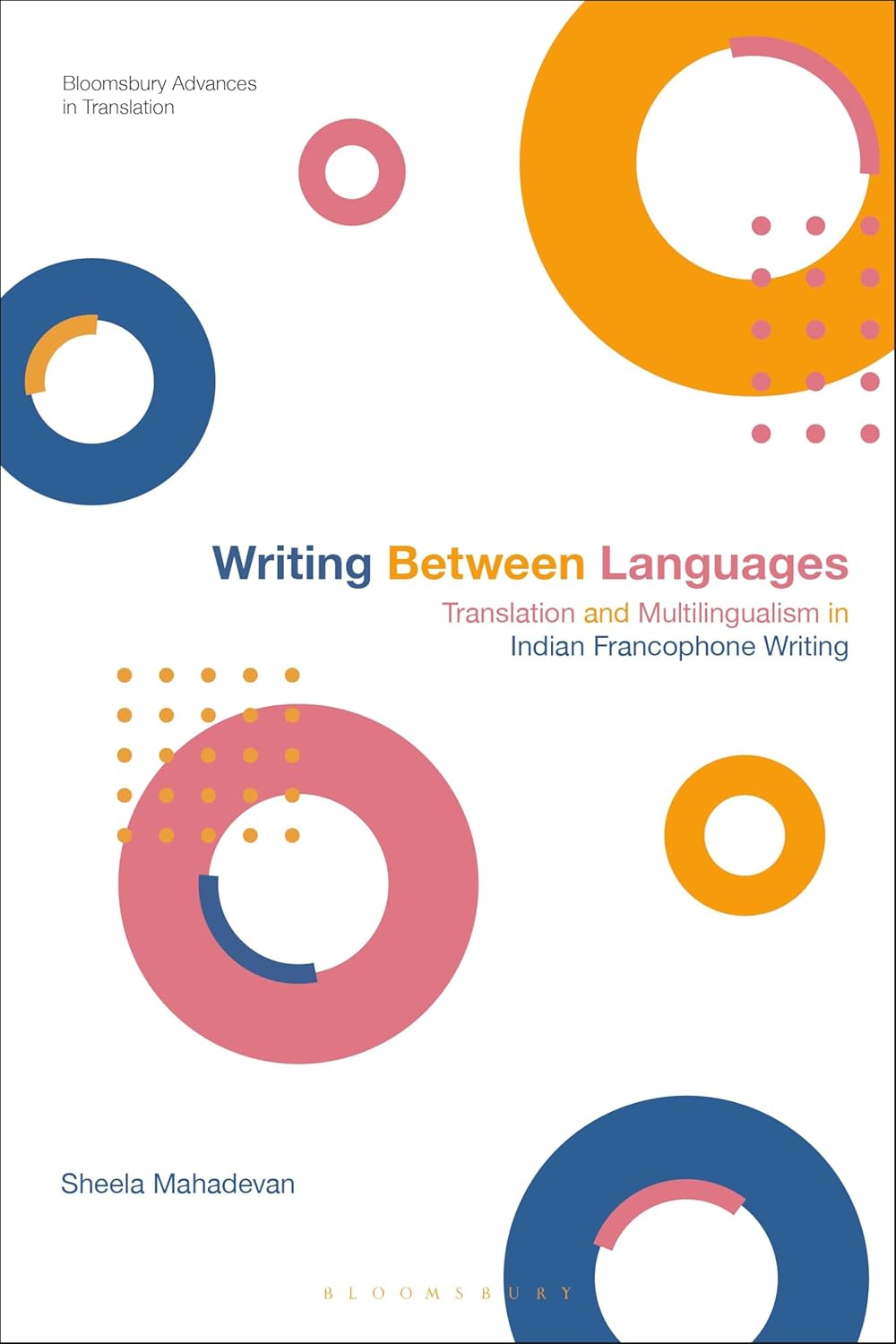
Much of the contemporary Indian literary landscape features writing in English and Indian languages, but Sheela Mahadevan points to the less-studied Francophone writing in India in Writing Between Languages: Translation and Multilingualism in Indian Francophone Writing. An academic at the University Liverpool and the English language translator of Ari Gautier’s Indian-Francophone novel Carnet secret de...

There’s even an Italian tongue-in-cheek about this: “traduttore, traditore”. Roughly “translator, traitor”, but in English it’s a self-demonstrating example — because that “traditore” isn’t just “traitor”, it’s also “cheater, unfaithful”. It’s like you love the original work, but you can’t not cheat on it, by adding or removing meaning.
And much in the line of the text (Mahadevan translating French “maman” not into the new metalanguage, English, but into Tamil), there’s often situations that cheating is good. Sure, you’re adding meaning not present in the “true” original, but your reader will still enjoy it. My go-to example of that is Anne Rice’s Interview with the Vampire — the original is good, but the Portuguese translation by Clarice Lispector makes it a literary wonder, because IMO she was better at representing Louis’ introspection than Rice.
Yup, fully agree.
I work as a translator; and at least at the start, I was willing to use some AI tools; mostly for ideas on how to translate specially problematic excerpts*. I stopped doing it because the AI translations are consistently tone deaf, no matter how much context you give it or if you ask it for a [polite, rude, bored, etc.] translation.
*never copypasting the output, mind you; I might not be a good translator but I still have my pride. Using a weird dictionary is fine, telling it to do your work is not.
The most positive thing I can say about AI and translation is that I think in a more sane world a group of people like you could oversee models trained on translations curated and done by professionals like you to create tools, but those tools would require constant oversight and review by human translator professionals.
I am not against opinionated autocorrect, I am against the idea that the dataset and the curators of a high quality dataset aren’t the truly valuable part.
It takes a human insight to be honest to a reader about the ways in which any given translation has betrayed the truth, confoundingly there is no shortcut to understanding how any given translation does that, you can’t pattern match that kind of thing.
Yup. I don’t have anything intrinsically against the tech (in fact I love projects like the AI horde), but I think it’s foolish to pretend they’ll replace anyone in the near future.
Amen. And it’s kind of weird how things are going: devalue the trade while relying on it, and pretending the automated tools will “soon” reach the same level as professional translation. Machine translation has been a thing for years, and it has come a long way, but like you said it’s still pattern-matching, even in AI times.