
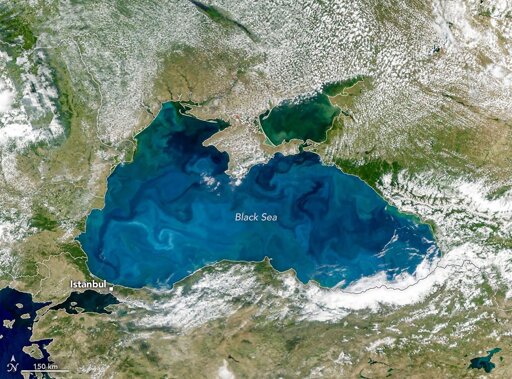
The turquoise color is likely caused by coccolithophores, a type of phytoplankton covered with calcium carbonate plates that can give surface waters a milky blue appearance. These types of phytoplankton tend to dominate in late spring and early summer. Other times of the year, diatoms—a type of microscopic algae with silica shells—can become more prevalent, and they tend to darken the water rather than brighten it.
Though coccolithophores are microscopic, they become so abundant during a bloom that they are visible from space. This makes remote sensing a useful tool for researchers studying bloom dynamics in regions where direct sampling is limited. Beyond their visibility, these blooms also contribute to the ocean’s carbon cycle. When they die, some of the carbon they have taken up sinks to the seafloor, where it can remain stored for long periods.