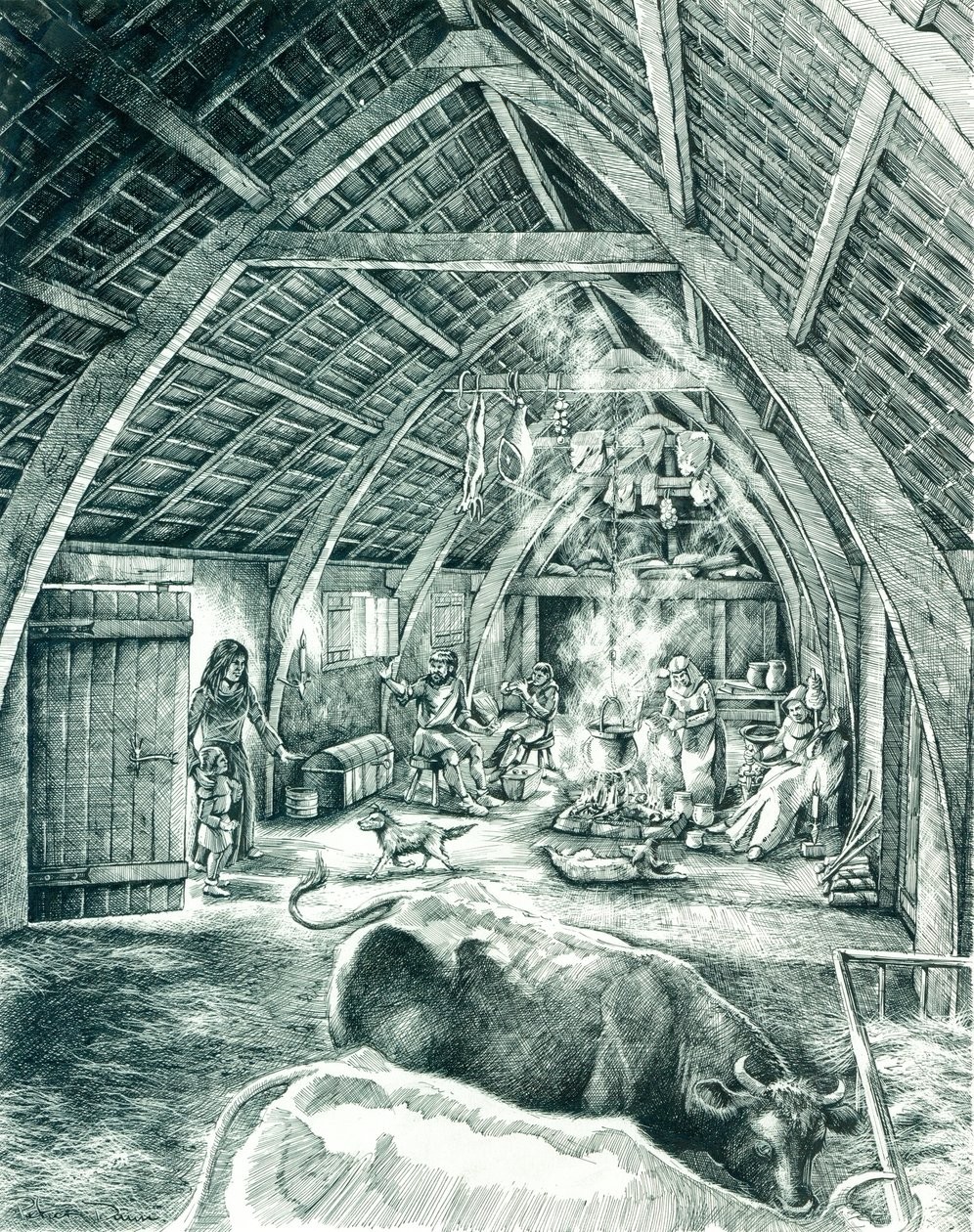
For what I pay for a 600sqft apartment, this isn’t looking too bad…
I dunno, looking at those roommates…
A couple house cows, a fiddly flute dude, and communal cook - they seem cool. Definitely better than a Craigslist roommate
It’s the house cows I’m worried about!
How do you happily play the flute while asphyxiating from that smoke, cow gas, and the smell of decomposing carcasses hanging above?
Edit: instrument
I’m a medieval reenactor and I have slept in those conditions. It’s really not bad! There is little to no smoke. There may not have been chimneys, but there are holes for the smoke to escape. And a good fire has little smoke. The meat is dried/cured/smoked and doesn’t smell. The cows, well, you get used to it. Ask any farmer.
Of course, close contact with farm animals is a major vector for new viruses (like pox and covid). There’s a reason life expectancy was significantly lower in the Middle Ages, especially for young children.
I’m also a medieval reenactor :D 14th century mercenaries. If you think about it, we “cheat” all the time by having tents for everyone, plenty of food, sanitary facilities (even if it’s only portaloos), being vaccinated, etc. Campaign life would be a lot less enjoyable if we actually kept it authentic.
My grandad used to say “Many a man has frozen to death, but nobody’s ever stunken to death yet.” when us kids threw open a window one too many times for his taste in winter.
(“Is schon mancher erfroren, aber noch keiner erstunken.”)
Hehe, “erstunken”. German is so poetic xD
People can get used to anything!
Strange to think what a late invention the (house) chimney was! It wasn’t until the late Renaissance that chimneys began to be a standard feature of homes.
Isn’t that a flute?
Yes! Thank you!
Same way you can hum along to the radio while baking in a hot car and smothering in exhaust fumes.
I wonder how many people would be regularly living in there, full time.
One full family, three-ish generations, plus animals.
Assume 2 parents, 2 (living) grandparents, and 3 (living) children, that would put it at 7 people. You might include 1 or 2
no good layabout distant relationsrelatives, guests, or the occasional lucky great-grandparent, considering the tightly-knit nature of social circles at the time and the general unpredictability of life, to bring it to 9.So hardly private, but not necessarily crowded either, even with some livestock taking up room. This would be a good-sized home for the period and class depicted. Neither wealthy (by the standards of the peasantry) nor poor (by the standards of the peasantry) - especially with the loft (depicted) and assuming a root cellar.
Plus, generally you would be out working during the day and at sleep during the night. You didn’t have to spend long winter nights fighting over the tv remote with the in-laws.
Amazing roof!
I remember reading that roofing in medieval England could be very particular to the region/materials available. Some places in Wales, it was common for even poor peasant huts to have slate roof tiles. Transportation (and market) limitations caused more trouble than productive bottlenecks.
Thatched roofs like this are still in use today in some areas! It’s actually really good insulation, and eco-friendly. They’re awfully flammable though, and they do need more regular maintenance.
Plus birds and bugs tend to like them. Birds I don’t mind, but fuck having bugs in one’s roof. Give me slate tiling any day, I’ll take the cold. :p
Now imagine living somewhere, where they slap bitumen soaked paper on your house and call that a roof 🤷
Brooklyn?