
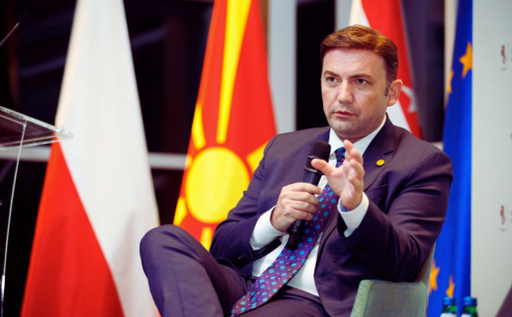
Osmani argued that the VMRO-DPMNE-led government was shaped with the support of European political circles that are themselves Eurosceptic, and that this environment has contributed to the emergence of a leadership he views as a channel for Russian influence within the European Union. According to him, this backing is not aimed at speeding up EU integration, but instead at weakening and relativizing the enlargement process in the Western Balkans.
He identified three parallel factors behind what he described as the current situation. The first, in his view, is external influence, linked to European actors skeptical of the EU project. The second is the absence of a strong internal political counterweight. He said that the Albanian political factor in North Macedonia has traditionally acted as a guarantor of Euro-Atlantic orientation, but that this role is now weakened due to what he called uncertain representation, leaving no effective resistance to the current direction.
The third factor, according to Osmani, relates to the structure of the electorate. He claimed that around 250,000 Macedonian citizens hold Bulgarian passports and therefore have access to EU rights, arguing that this group benefits from European integration but does not actively push for reforms. In his words, when voters are granted “the carrot,” they are less inclined to demand “the stick.”