
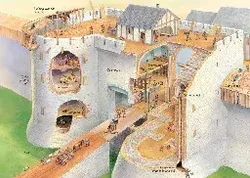
Fun Fact! Julius Caesar, of dictator and conqueror fame, highly praised these Gallic-made walls as being resistant to siege weapons. Respect from a foe!
This work, with respect to appearance and variety, is not unsightly, owing to the alternate rows of beams and stones, which preserve their order in right lines; and, besides, it possesses great advantages as regards utility and the defense of cities; for the stone protects it from fire, and the wood from the battering ram, since it [the wood] being mortised in the inside with rows of beams, generally forty feet each in length, can neither be broken through nor torn asunder.
Caesar had good reason to hype up the Gallic defenses, since he beat them. Writing about how good they were was meant to increase his own game.
Certainly true!
Even so, his praise of Gallic craftsmanship and cunning offers us rare and valuable insight into details about ‘barbarians’ other ‘civilized’ authors of the time considered too trivial or mundane to mention, many of which have been backed by archeological evidence - Gallic wall construction included!
That’s love for the game.
Hell yeah. Lincoln log walls. I woulda been a champ in BCE
And moats! Don’t forget the moats. Very important, moats.
You don’t want them to dig under your walls do you?
I think a ditch would be more of what was used back then. Most sieges were not engineering attacks but rather brute force attacks.


Oh for sure, I meant a ditch, to me a moat can also be a ditch. Definitely have a ditch. Several. You can’t have too few.
I most certainly would not want them to do that! That’s like, my least favorite thing to have done to my settlement walls!
Looks like it could probably even survive a cannon shot to some extent. Might breach the stone but all that earth will absorb the impact.
Seems like the protruding ends of those logs would make this wall easier to climb than you’d want.
Still not super easy, of course, but if an enemy was trying to sneak in or assault the wall, it seems like that would give them nice convenient handholds for most of the way up.
My understanding is that the classic Incan, fitted-stone walls worked similarly. Very impressive work on the exactingly-cut, huge outer stones, but the insides filled with Barney Rubble, etc.
Rubble core is very common in historic masonry across the world. It’s so convenient!