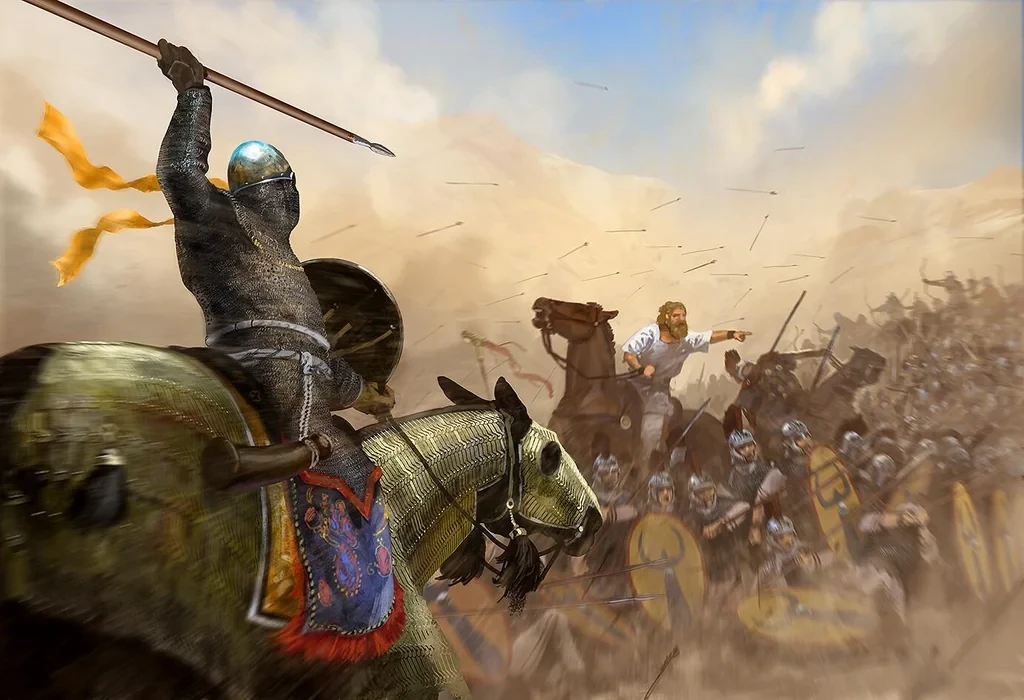
Yeah, Julian caught a javelin during the attack, which probably wouldn’t have killed him… except that he had rushed to show his troops that THEIR EMPEROR WAS WITH THEM during the ambush, and so neglected to put on his goddamn armor. Lingered in agony for a few days and then died. Big RIP, you were a real one Julian
When I was ~10yo, for some reason I became obsessed by the American Civil War. I seem to recall learning about a rather high number of military leaders who became so distracted upon leadership that they became relatively easy marks for enemy riflemen, and lost limbs or their lives as a result. They neglected their Emperor Julian training, I guess. :S
The Civil War was crazy for that. The casualty rate of the brass was insane. Some of it was because a lot of them were really just civilians, some of it was because the ‘norm’ of rifled weaponry hadn’t really set in the thinking of militaries then (even though it’s a MASSIVE game changer), and some of it is that 19th century MANLY bravado. Dulce et decorum est…
General Sherman, for example, who was as bright - and honestly as paranoid - as a general as one could hope for, I remember in one small meaningless skirmish observing the line, standing up, in full view of the enemy, while bullets were whizzing around him and one of his own men (who was taking cover) asked him to get down for his own safety.
Sherman told him, “Mind your own goddamn business” and went back to observing the skirmish.
To be fair, Sherman was very much a ‘soldier’s soldier’, he knew how his troops thought and how they’d react. The soldier who relayed the story in his journey essentially writes after that, “Well, I guess if the General is calm under fire, he must have things under control.” And that unshakability is a great advantage… it’s just… if you do get domed by bullet, the disadvantage for your side is much greater than the advantage received.
I guess I’d forgotten that about Sherman, but I certainly remember stories like that in general. Indeed, it was really quite amusing, coming across glowing historical accounts that described such behavior as ‘terribly brave and even noble, standing up in a hail of bullets.’
I guess I hadn’t quite realised that rifling only became common in the mid-1800’s, even though it was technically invented much earlier. Another thing I seem to remember about the ACW is that military leaders commonly employed tactics & strategy that was more-suited to earlier eras, contributing to the high loss of life.
Another thing I seem to remember about the ACW is that military leaders commonly employed tactics & strategy that was more-suited to earlier eras, contributing to the high loss of life.
Oh yeah. In a big way. They were treating the war like it was Napoleonic, and it was fucking industrial. Small arms had quadruple the range and significantly greater precision and accuracy at smaller distances and fired faster, artillery was MUCH more deadly, and the resources able to be marshalled by each side via trains and canals were so massive that the war couldn’t be decided by a few battles, but instead by brutal attrition.
the resources… were so massive that the war couldn’t be decided by a few battles, but instead by brutal attrition.
Huh, that’s interesting. But, I mean… what if the North had had top-level, quality leadership, as comparable to Robert E. Lee on the other side? Under such soicumstances (sorry, Curly Howard moment), couldn’t the war have been ended earlier, and more efficiently?
Btw, I remember now taking a stab at the ACW over at my community. Sadly, some pics dropped out, but there’re still plenty left. I even think you reviewed it for me! Altho… I would have to pretty much rewrite the article to incorporate what you recommended at the time. (good problems to have, eh?)
Huh, that’s interesting. But, I mean… what if the North had had top-level, quality leadership, as comparable to Robert E. Lee on the other side? Under such soicumstances (sorry, Curly Howard moment), couldn’t the war have been ended earlier, and more efficiently?
Lee is overrated, and lacked strategic vision. But it is possible that there could have been a quick ‘knockout’ blow in maybe the first year of the war, especially if First Bull Run went differently. It would be snuffing the fire before it reaches the trail of gasoline.
After that, though, both sides had retooled for a total war that neither of them truly understood. Sherman and Grant, interestingly, both did understand this strategic outlook from the start.
Interesting. Can you give me an instructive R.E.L. example? For my part, as someone who visited Gettysburg back in the day, Pickett’s (sp?) Charge seemed like a 100% disastrous military decision from every single angle. That said, maybe Lee was taxed, stressed and at the ‘end of his rope’ by that point. That would also make sense, methinks.
I’m with you on Grant, though, and it’s been nice to see historians do ‘volte-faces’ upon him, as the years go by. Sherman is trickier for me though, as… just a bad feeling about marching & torching, torching & marching, in general. Gods…
Also, there’s the fact (which I didn’t directly allude to in my mini-article) that the North essentially lost the post-ACW, which IMO has significantly lead directly to the current disaster in the States. The Andrew Johnson Blunder Years, or whatever.
Interesting. Can you give me an instructive R.E.L. example?
I could probably give you examples, except I don’t know what R.E.L. is.
For my part, as someone who visited Gettysburg back in the day, Pickett’s (sp?) Charge seemed like a 100% disastrous military decision from every single angle.
Oh, it absolutely was. Lee still remains lionized, though, because the Lost Cause narrative shifted the blame onto Pickett himself, whose greatest crime in the situation was being a Confederate soldier.
That said, maybe Lee was taxed, stressed and at the ‘end of his rope’ by that point. That would also make sense, methinks.
That too. But Longstreet warned him that it was a fool’s errand, and Lee insisted anyway.
I’m with you on Grant, though, and it’s been nice to see historians do ‘volte-faces’ upon him, as the years go by. Sherman is trickier for me though, as… just a bad feeling about marching & torching, torching & marching, in general. Gods…
Honestly, it’s not nearly as bad as the Lost Cause South attempts to portray it. Sherman’s overwhelmingly negative reputation in the South didn’t develop until Reconstruction was over and Lost Cause mythmaking began in earnest.
I’m reminded of an incident in his memoirs wherein he discusses a stop by happenstance at a plantation house along the road during his campaign. He talks about the wretchedness of the homes of the formerly enslaved folk, and the extensive structures of the plantation, without any indication that they were in danger at that moment.
He was then informed by an aide that they found out the house belonged to some Confederate government bigwig.
Sherman immediately claimed the main house as bivouac for him and his staff, ordered the plantation’s infrastructure and the house’s furniture to be burned for fuel to keep the troops warm, and broke into the good alcohol and had his men drink it all.
While we go a little hard on the burning the South meme, the fact is that Sherman’s main goal was speed, not destruction. It wasn’t a slow, methodical pillaging of the countryside. It was the world’s fastest infantry army, moving so quickly that Lincoln and Grant were out of contact with Sherman for over a month. Over everything, the desire was to take whatever could be useful for the march, which was mostly food, fuel, and clothing, and even then, at the end of it his troops were tattered and exhausted (though also immensely satisfied with their work, since it had very apparently shortened the war).
The main objects of destruction were cotton (which was useless to the army in its unrefined form and the South’s main dependency) and infrastructure like railroads, bridges, and telegraph lines (which the army also largely could not make use of, or found less useful than the enemy).
Civilians were often plundered, with food stores and livestock seized and houses sometimes ransacked for other useful goods (like clothes and shoes; and of course soldiers with sticky fingers claiming any jewelry light enough to be hidden from the prying eyes of officers), but actual burning or deliberate destruction of civilian property (other than cotton mills) is rare.
Yeah, Julian caught a javelin during the attack, which probably wouldn’t have killed him… except that he had rushed to show his troops that THEIR EMPEROR WAS WITH THEM during the ambush, and so neglected to put on his goddamn armor. Lingered in agony for a few days and then died. Big RIP, you were a real one Julian
When I was ~10yo, for some reason I became obsessed by the American Civil War. I seem to recall learning about a rather high number of military leaders who became so distracted upon leadership that they became relatively easy marks for enemy riflemen, and lost limbs or their lives as a result. They neglected their Emperor Julian training, I guess. :S
The Civil War was crazy for that. The casualty rate of the brass was insane. Some of it was because a lot of them were really just civilians, some of it was because the ‘norm’ of rifled weaponry hadn’t really set in the thinking of militaries then (even though it’s a MASSIVE game changer), and some of it is that 19th century MANLY bravado. Dulce et decorum est…
General Sherman, for example, who was as bright - and honestly as paranoid - as a general as one could hope for, I remember in one small meaningless skirmish observing the line, standing up, in full view of the enemy, while bullets were whizzing around him and one of his own men (who was taking cover) asked him to get down for his own safety.
Sherman told him, “Mind your own goddamn business” and went back to observing the skirmish.
To be fair, Sherman was very much a ‘soldier’s soldier’, he knew how his troops thought and how they’d react. The soldier who relayed the story in his journey essentially writes after that, “Well, I guess if the General is calm under fire, he must have things under control.” And that unshakability is a great advantage… it’s just… if you do get domed by bullet, the disadvantage for your side is much greater than the advantage received.
I guess I’d forgotten that about Sherman, but I certainly remember stories like that in general. Indeed, it was really quite amusing, coming across glowing historical accounts that described such behavior as ‘terribly brave and even noble, standing up in a hail of bullets.’
I guess I hadn’t quite realised that rifling only became common in the mid-1800’s, even though it was technically invented much earlier. Another thing I seem to remember about the ACW is that military leaders commonly employed tactics & strategy that was more-suited to earlier eras, contributing to the high loss of life.
Oh yeah. In a big way. They were treating the war like it was Napoleonic, and it was fucking industrial. Small arms had quadruple the range and significantly greater precision and accuracy at smaller distances and fired faster, artillery was MUCH more deadly, and the resources able to be marshalled by each side via trains and canals were so massive that the war couldn’t be decided by a few battles, but instead by brutal attrition.
Ah, “Napoleonic.” Perfect…
Huh, that’s interesting. But, I mean… what if the North had had top-level, quality leadership, as comparable to Robert E. Lee on the other side? Under such soicumstances (sorry, Curly Howard moment), couldn’t the war have been ended earlier, and more efficiently?
Btw, I remember now taking a stab at the ACW over at my community. Sadly, some pics dropped out, but there’re still plenty left. I even think you reviewed it for me! Altho… I would have to pretty much rewrite the article to incorporate what you recommended at the time. (good problems to have, eh?)
Lee is overrated, and lacked strategic vision. But it is possible that there could have been a quick ‘knockout’ blow in maybe the first year of the war, especially if First Bull Run went differently. It would be snuffing the fire before it reaches the trail of gasoline.
After that, though, both sides had retooled for a total war that neither of them truly understood. Sherman and Grant, interestingly, both did understand this strategic outlook from the start.
Interesting. Can you give me an instructive R.E.L. example? For my part, as someone who visited Gettysburg back in the day, Pickett’s (sp?) Charge seemed like a 100% disastrous military decision from every single angle. That said, maybe Lee was taxed, stressed and at the ‘end of his rope’ by that point. That would also make sense, methinks.
I’m with you on Grant, though, and it’s been nice to see historians do ‘volte-faces’ upon him, as the years go by. Sherman is trickier for me though, as… just a bad feeling about marching & torching, torching & marching, in general. Gods…
Also, there’s the fact (which I didn’t directly allude to in my mini-article) that the North essentially lost the post-ACW, which IMO has significantly lead directly to the current disaster in the States. The Andrew Johnson Blunder Years, or whatever.
I could probably give you examples, except I don’t know what R.E.L. is.
Oh, it absolutely was. Lee still remains lionized, though, because the Lost Cause narrative shifted the blame onto Pickett himself, whose greatest crime in the situation was being a Confederate soldier.
That too. But Longstreet warned him that it was a fool’s errand, and Lee insisted anyway.
Honestly, it’s not nearly as bad as the Lost Cause South attempts to portray it. Sherman’s overwhelmingly negative reputation in the South didn’t develop until Reconstruction was over and Lost Cause mythmaking began in earnest.
I’m reminded of an incident in his memoirs wherein he discusses a stop by happenstance at a plantation house along the road during his campaign. He talks about the wretchedness of the homes of the formerly enslaved folk, and the extensive structures of the plantation, without any indication that they were in danger at that moment.
He was then informed by an aide that they found out the house belonged to some Confederate government bigwig.
Sherman immediately claimed the main house as bivouac for him and his staff, ordered the plantation’s infrastructure and the house’s furniture to be burned for fuel to keep the troops warm, and broke into the good alcohol and had his men drink it all.
While we go a little hard on the burning the South meme, the fact is that Sherman’s main goal was speed, not destruction. It wasn’t a slow, methodical pillaging of the countryside. It was the world’s fastest infantry army, moving so quickly that Lincoln and Grant were out of contact with Sherman for over a month. Over everything, the desire was to take whatever could be useful for the march, which was mostly food, fuel, and clothing, and even then, at the end of it his troops were tattered and exhausted (though also immensely satisfied with their work, since it had very apparently shortened the war).
The main objects of destruction were cotton (which was useless to the army in its unrefined form and the South’s main dependency) and infrastructure like railroads, bridges, and telegraph lines (which the army also largely could not make use of, or found less useful than the enemy).
Civilians were often plundered, with food stores and livestock seized and houses sometimes ransacked for other useful goods (like clothes and shoes; and of course soldiers with sticky fingers claiming any jewelry light enough to be hidden from the prying eyes of officers), but actual burning or deliberate destruction of civilian property (other than cotton mills) is rare.