Seriously, visiting North America is “we’ve tried adding a [car] lane to the highway and can’t figure out why nobody is cycling or taking transit.”
Transportation networks indeed make little sense when there’s an ocean in between. Too bad the USA can’t play nicely with others.
Common standards would be a challenge, in some areas -can’t do electrical because 50hz vs 60hz and deep integration with USA grid. The NEMA plugs are a bit of a nightmare. But for vehicle safety and emissions it would be a step forward; more countries adopted the EU than US standards there.
It’s actually changing here too, at least in cities. Bike lanes being added, streets being repurposed back to foot and bike traffic. Improved public transit.
I don’t even think the electrical changes would be hard because of US integration, it would be hard because of so much of it. We could switch. Most houses already have a 240 circuit needed for things like car chargers, dryers and ovens. You could easily retrofit a house. But the grid feeding that house would need to be rebuilt from the ground (pun intended) up.
Edit: re electricity: We apparently did this in the early 50s once already. We were on a 25hz system, and power technicians went to every single house and retrofitted them to go from 25 to 60hz. Wild. I just learned that.


Amsterdam changed.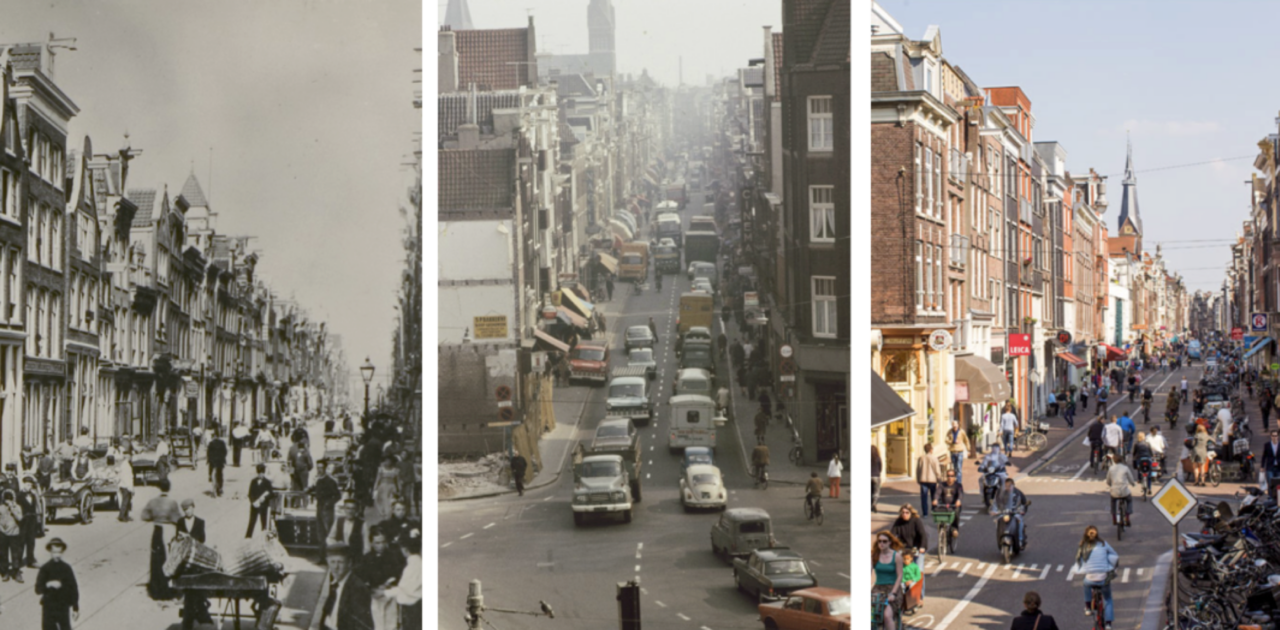
Paris is changing.
… København
Seriously, visiting North America is “we’ve tried adding a [car] lane to the highway and can’t figure out why nobody is cycling or taking transit.”
Transportation networks indeed make little sense when there’s an ocean in between. Too bad the USA can’t play nicely with others.
Common standards would be a challenge, in some areas -can’t do electrical because 50hz vs 60hz and deep integration with USA grid. The NEMA plugs are a bit of a nightmare. But for vehicle safety and emissions it would be a step forward; more countries adopted the EU than US standards there.
It’s actually changing here too, at least in cities. Bike lanes being added, streets being repurposed back to foot and bike traffic. Improved public transit.
I don’t even think the electrical changes would be hard because of US integration, it would be hard because of so much of it. We could switch. Most houses already have a 240 circuit needed for things like car chargers, dryers and ovens. You could easily retrofit a house. But the grid feeding that house would need to be rebuilt from the ground (pun intended) up.
Edit: re electricity: We apparently did this in the early 50s once already. We were on a 25hz system, and power technicians went to every single house and retrofitted them to go from 25 to 60hz. Wild. I just learned that.