- 18 Posts
- 4 Comments








 0·11 days ago
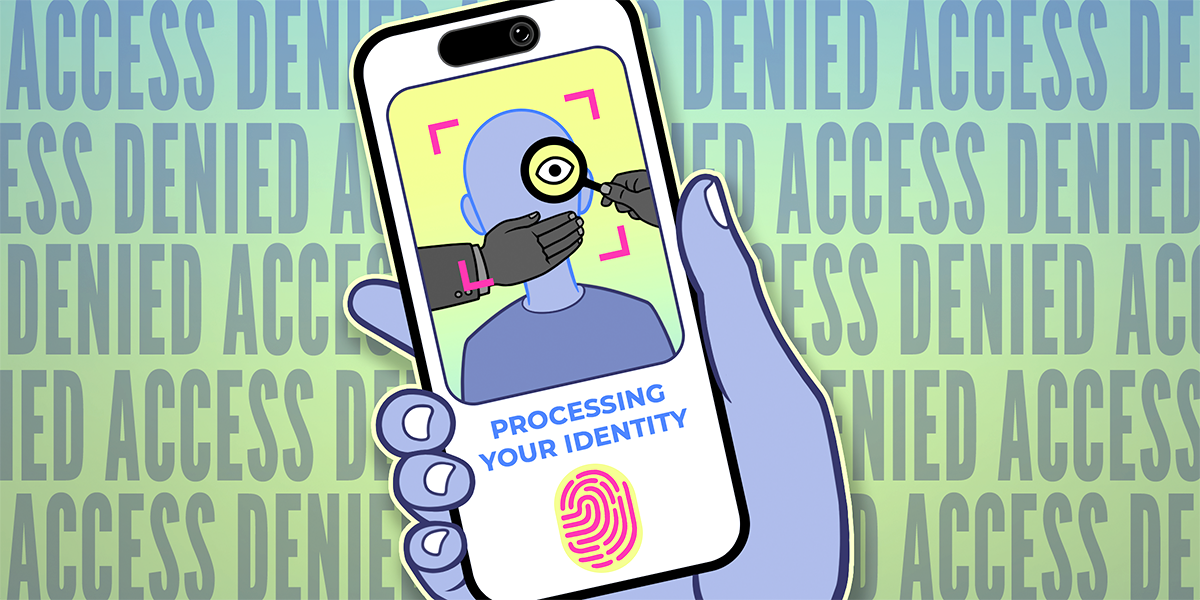
I don’t disagree with the thrust of what you are saying, but you are also misunderstanding something here, **we aren’t talking about replacing a human employee with an “AI” for a task like creating a marketing image, we are talking about convincing large corporations and entities to feed all of their data into an “AI Lab” and then that “AI Lab” basically does traditional industrial espionage and sabotage to replicate the business model of the company/industry they were supposed to be assisting.
This would likely be done with a lot of automation, but it is CRUCIAL to understand this strategy can be done without AI at all, what is crucial is convincing organizations to hoover all of their sensitive data over to you and then leverage it in ways that are opaque enough that blowback either doesn’t happen or is long delayed.




I don’t even think it will take many jobs permanently, but to your point it never mattered if AI works or can actually replace human beings at work, all that matters is that people believe it will and then that means that companies can fire large amounts of workers and hire them back under permanently “temporary” positions that pay less, have less stability and condescend the humanity of the worker at a basic level by framing their labor as a temporary substitution for a superior LLM/“AI” to eventually step in and replace.
It is the SAME EXACT STORY as how Uber from the beginning framed its human drivers as temporary… even as dreams of self driving cars have faded from any serious discussion in the near term… the mistreatment, devaluing and dehumanization were successfully codified into the rideshare industry which was always the goal in the first place.
Which isn’t to say that plenty of CEOs haven’t drank the KoolAid on AI and are totally lost in the sauce, but two things can be true at the same time…

Well said.
The synthetic data thing here pisses me off too, synthetic data has uses in science predicting sensor responses, comparing reality to expected findings, and analyizing related phenomena to the artificial data at a fine resolution with computer modelling but none of those things have to do with establishing a ground truth for what the model considers part of reality, part of its understanding of reality or part of the facts that supposedly underpin the reality.
If a scientist wants to analyze several types of algorithms and compare them maybe they might make a set of synthetic data that is artificially clean and simplified in order to compare and contrast the behavior of the algorithms especially at their edges and extremes. Note however that nothing about this process makes the algorithms smarter, the generative part is what the human scientist learns by observing what happens when the synthetic data is inputted into an algorithm. You need a human brain that understands context, understands the limits of a model vs the rest of reality, and understands things that aren’t explicitly said about the framing context of what is being examined.
“A.I.” is a lossy data compression algorithm, there is a fundamental “knowledge entropy” here where the end result can never be smarter than the raw data because the “A.I.” can do nothing but apply a lossy data compression algorithm to the training data.
This is not a cynical take on the potential for artificial intelligence but rather a hopeful and heartfelt thanks to the professions of librarians and archivists, for surely it is the curation of a quality data set where the genesis of intelligence happens. If nothing else Machine Learning proves that with brute force…

Which is exactly why they buy up all the enterprise data streams and machinery around it relevant to the industry before they try it, so they don’t have to be competent…