I don’t usually render dispersion, but the few times I’ve done it in the past was by mixing several refraction bsdfs with varying IORs and colors. How do you use white noise for the same effect?
In this video, the author goes into detail as to why using white noise is superior - the dispersed colors are continuous.
And with this glorious feature update (assuming it will land in 5.3) we can skip all the riggamaroo demonstrated in the video and get even more physically “accurate” result.
Cheers, I’ll take a look. From your capture I’m not sure I understand how it would create a continuous rainbow. I would expect homogeneous color noise. I suppose the video answers this


Heck yes! no more white noise + IOR range trickery.
People will go nuts when they put in full caustics.
edit: tried it with 2026-08-20 build, and it’s okay.
feels more noisy compare to old hacky way.
I don’t usually render dispersion, but the few times I’ve done it in the past was by mixing several refraction bsdfs with varying IORs and colors. How do you use white noise for the same effect?
I don’t usually do dispersion either. I forgot the detail and have to refresh my memory by building it.
This node setup is a simplified version of method in the video linked below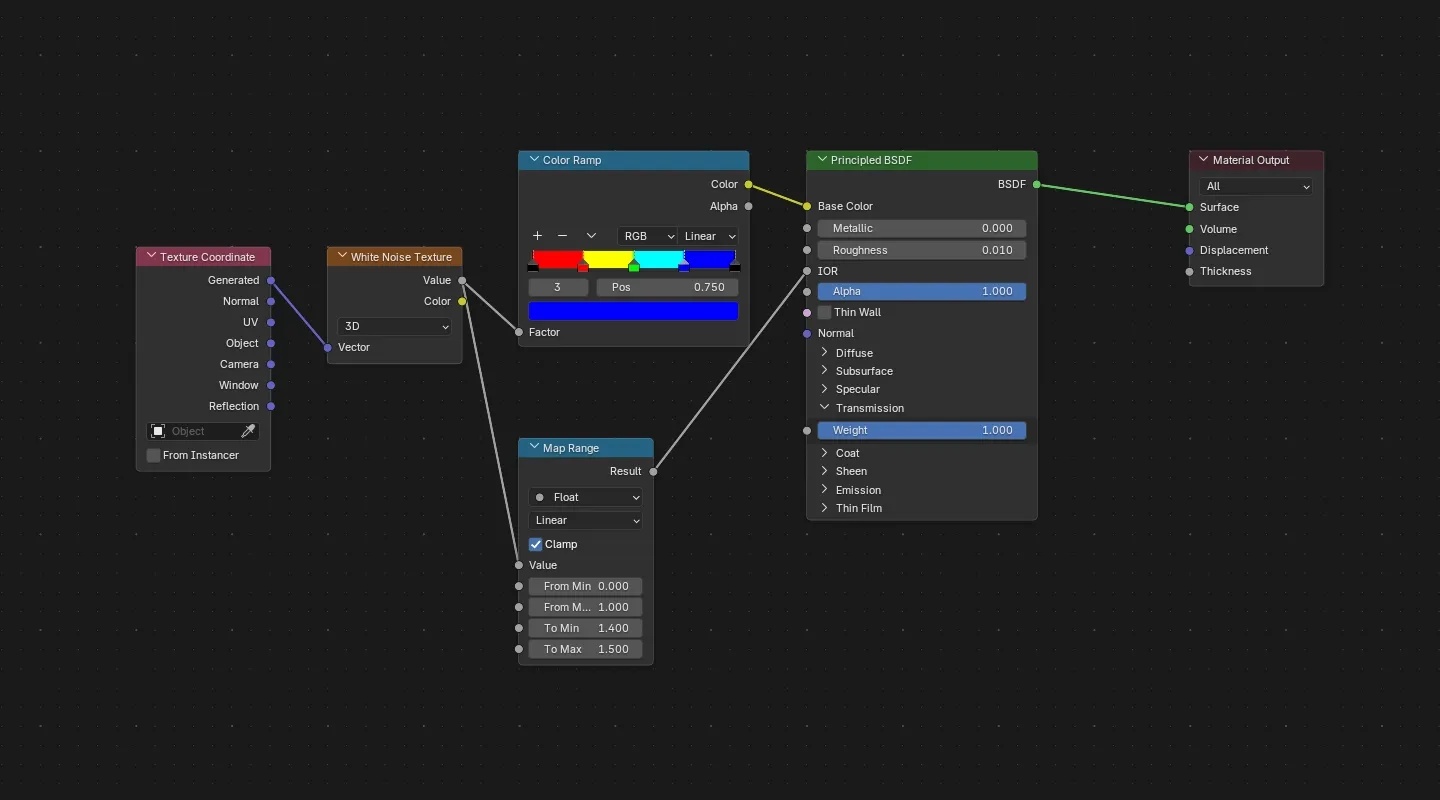
https://www.youtube.com/watch?v=lEPZ1IUkoB4
In this video, the author goes into detail as to why using white noise is superior - the dispersed colors are continuous.
And with this glorious feature update (assuming it will land in 5.3) we can skip all the riggamaroo demonstrated in the video and get even more physically “accurate” result.
Cheers, I’ll take a look. From your capture I’m not sure I understand how it would create a continuous rainbow. I would expect homogeneous color noise. I suppose the video answers this