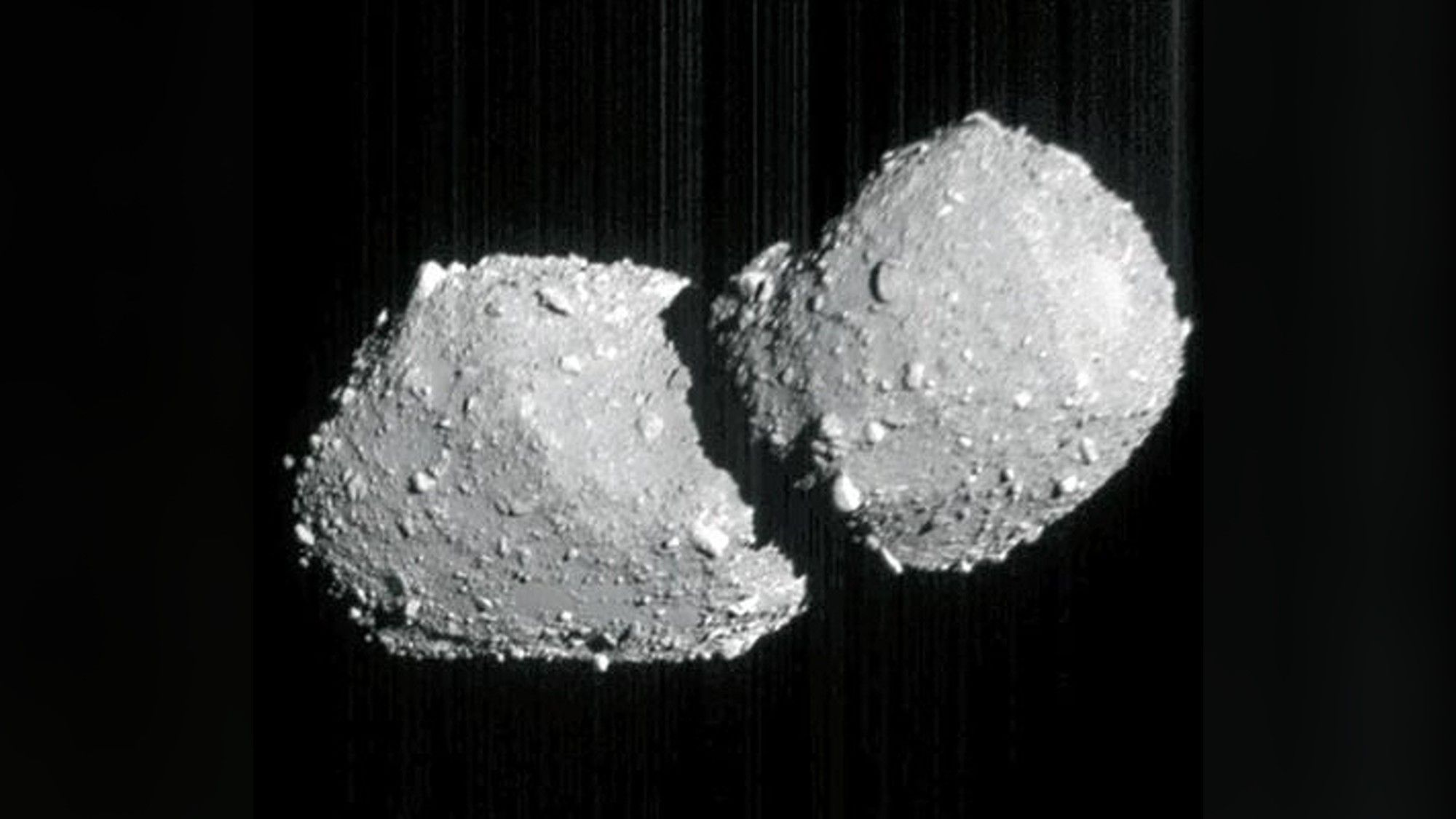
m3t00🌎🇺🇦@lemmy.worldM to science@lemmy.worldEnglish · 11 天前Japan's Hayabusa2 probe captures remarkable photo of a two-headed asteroid 62 million miles awaywww.space.comexternal-linkmessage-square9linkfedilinkarrow-up1199arrow-down12file-text
arrow-up1197arrow-down1external-linkJapan's Hayabusa2 probe captures remarkable photo of a two-headed asteroid 62 million miles awaywww.space.comm3t00🌎🇺🇦@lemmy.worldM to science@lemmy.worldEnglish · 11 天前message-square9linkfedilinkfile-text
minus-squarekayzeekayzee@lemmy.blahaj.zonelinkfedilinkEnglisharrow-up20·11 天前Hold up… this lil thing went all the way to an asteroid, brought a sample back to EARTH? And then just went back out to see more asteroids??? That’s so cool!!! According to the article, after this it’s going to orbit and land on an asteroid that’s only 11m wide?
minus-squarerhythmisaprancer@quokk.aulinkfedilinkEnglisharrow-up2·11 天前Very interesting to me that asteroids that are not that much larger than a human can form/stay together! Let alone be landed on. How much gravity would we generate in space?
minus-squareYondoza@sh.itjust.workslinkfedilinkEnglisharrow-up4·11 天前Same amount that we do on earth!


Hold up… this lil thing went all the way to an asteroid, brought a sample back to EARTH? And then just went back out to see more asteroids???
That’s so cool!!!
According to the article, after this it’s going to orbit and land on an asteroid that’s only 11m wide?
Very interesting to me that asteroids that are not that much larger than a human can form/stay together! Let alone be landed on. How much gravity would we generate in space?
Same amount that we do on earth!