You must log in or # to comment.
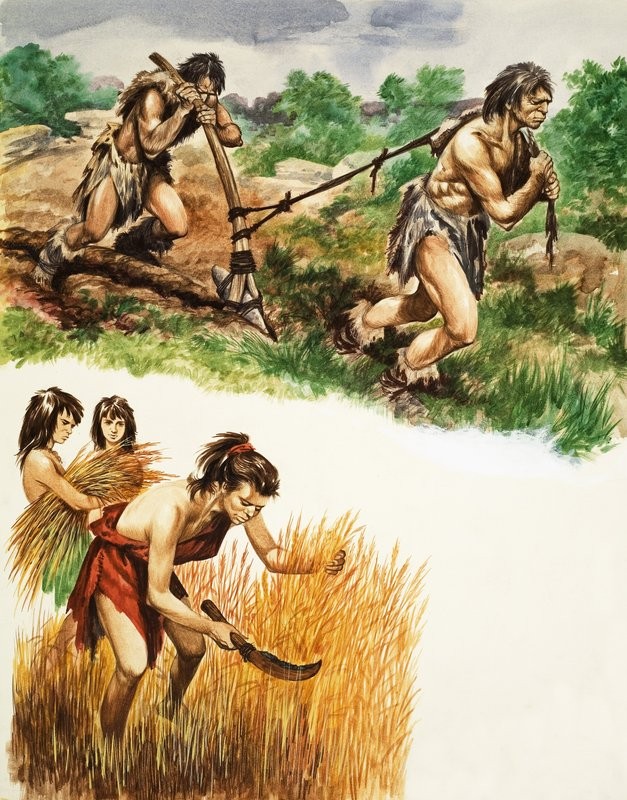
“Man, we really should domesticate an aurochs”
grug used to pull plow, now grug out of work… grug just happy tribe not invent capitalism yet.
At least they had colourful clothes
Okay, hear me out. I think this depiction is greatly influenced by gender roles of the 20th century. I believe early humans had quite small tribes and women were as active in hunting as men - now that I am writing this it dawns on me, that the practice of agriculture means that humans moved past the hunter-gatherer-stage which was (to the best of my knowledge) the reason for the development of gendered duties or roles. Yet, I believe men were more than capable physicly to harvest wheats. And I expect tribes to still be around 30-50 strong, I kinda expect the number of workers still to be so low, that everyone has to do a little bit of everything.
Why did agriculture pave way to gendered roles?
I learned that hunter-gatherer women would breastfeed children up to 5 years of age. During this time they could not get pregnant again. When agriculture became the new hot thing, women could wane their children far earlier and had a pretty reliable source of sustinance, like porridge. Since they could wane children sooner, they could become pregnant again sooner. Thus their duties shifted more towards raising children.
source: https://www.ardsounds.de/episode/urn:ard:episode:cb111b2ab78e5b2d/ Episode “Wie kam die Frau an den Herd, und der Mann an die Macht?” [“Why are women tending the stove and men are in power”] of the German Podcast “Die Großen Fragen in 10 Minuten” [The Big Questions in 10 Minutes] by the WDR (public broadcaster)
In general, yes, your position is supported by the latest in archeology/anthropology!
But one major exception is depicted here - plowing was overwhelmingly male-dominated in early societies.